The Best Fluffy Pancakes recipe you will fall in love with. Full of tips and tricks to help you make the best pancakes.
⭐⭐⭐⭐⭐ 4.8 / 5
This isn’t your average box-mix shortcut. This Jello poke cake is engineered for a bakery-quality crumb — tight enough to hold the Jello filling without turning soggy, yet tender enough to melt on the tongue. The trick is a sour-cream–enriched batter that keeps the cake moist for days, plus a two-step soaking method that infuses every layer with vivid fruit flavor. It’s the dessert that disappears first at every potluck, barbecue, and birthday party.
| Prep Time: | 20 minutes |
| Cook Time | 30 minutes |
| Chill Time | 2 hours |
| Total Time | 2 hours 50 minutes |
| Servings | 8 |
| Scale | 1X · 2X · 3X |
| Category | Cake Recipes |
| Cuisine | American |
Ingredients
Cake
- 2 cups (240 g) all-purpose flour, spooned and leveled
- 1½ tsp baking powder
- ½ tsp baking soda
- ½ tsp fine sea salt
- ¾ cup (170 g) unsalted butter, room temperature
- 1½ cups (300 g) granulated sugar
- 3 large eggs, room temperature
- 2 tsp pure vanilla extract
- 1 cup (240 g) full-fat sour cream
Pro note: Room-temperature dairy and eggs cream more evenly into the batter, giving you a finer, more even crumb.
Jello Filling
- 1 box (3 oz / 85 g) Jello — any flavor (strawberry, raspberry, and cherry are classics)
- 1 cup (240 ml) boiling water
- ½ cup (120 ml) cold water
Pro note: For a more intense color and flavor, reduce the cold water to ⅓ cup. For a pastel, lighter soak, use the full ½ cup.
Frosting
- 2 cups (480 ml) heavy whipping cream, very cold
- 3 tbsp (24 g) powdered sugar, sifted
- 1 tsp pure vanilla extract
Pro note: Chill your bowl and whisk attachment in the freezer for 10 minutes before whipping — it doubles the staying power of the cream.
Instructions
Step 1 : Make the Batter
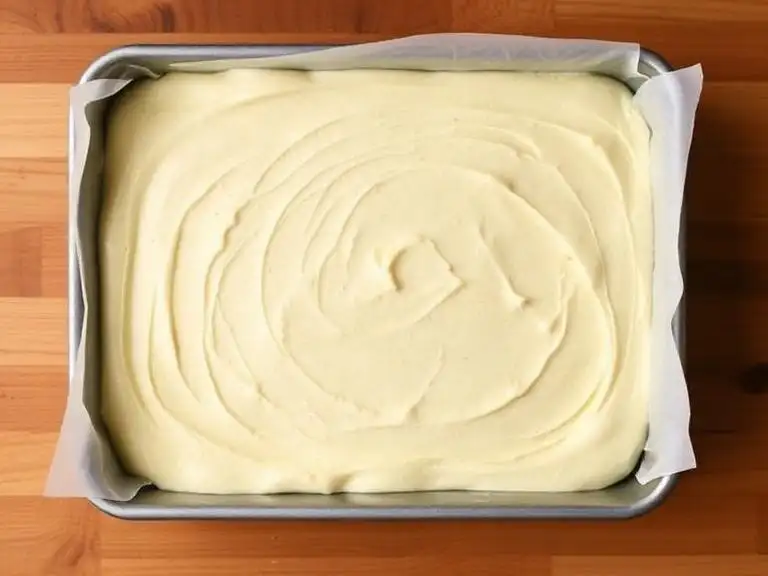
Preheat your oven to 350 °F (175 °C). Grease a 9×13-inch baking pan with butter and line the bottom with parchment. Whisk together the flour, baking powder, baking soda, and salt in a medium bowl; set aside. In a stand mixer fitted with the paddle attachment, beat butter and sugar on medium-high speed for 3–4 minutes until the mixture is pale ivory and noticeably fluffy — you should feel almost no grittiness when you rub it between your fingers. Add eggs one at a time, fully incorporating each before the next, then mix in vanilla. Reduce speed to low and alternate adding the flour mixture and sour cream in three additions, beginning and ending with flour. Mix only until the last streak of flour disappears; the batter will be thick and satiny.
Visual cue: Batter falls off the spatula in thick, slow ribbons.
Step 2 : Bake the Cake
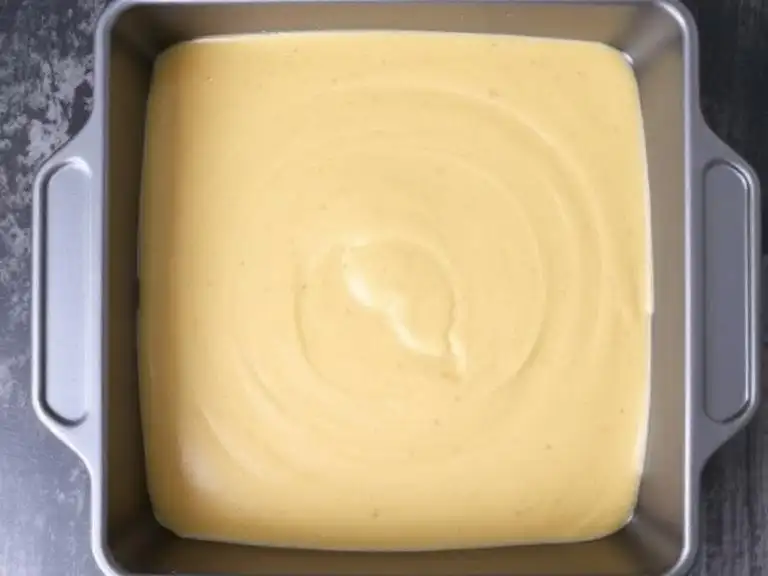
Spread the batter into the prepared pan, smoothing it into an even layer with an offset spatula. Bake for 28–32 minutes, rotating the pan halfway through.
Visual cue: The top is golden and the edges have pulled slightly away from the pan. Texture cue: The center springs back when lightly pressed with a fingertip. Doneness cue: A toothpick inserted in the center comes out with just a few moist crumbs — not wet batter.
Allow the cake to cool in the pan for 10 minutes.
Step 3 : Poke & Soak
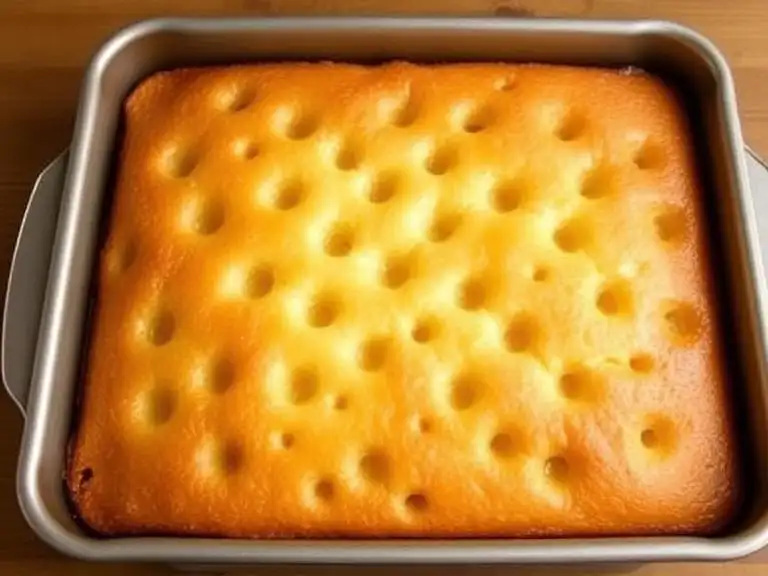
While the cake is still warm (not hot), use the handle of a wooden spoon or a thick chopstick to poke holes every inch across the entire surface — roughly 40–50 holes. Go deep, nearly to the bottom, to create channels for the Jello. Dissolve the Jello powder in 1 cup boiling water, stirring for 2 minutes until fully clear, then stir in ½ cup cold water. Pour the warm Jello slowly and evenly over the cake, tilting the pan to coax it into every hole.
Visual cue: You’ll see the Jello seep down into the cake rather than pool on top.
Step 4 : Chill
Cover the pan tightly with plastic wrap and refrigerate for at least 2 hours, or overnight. This rest period is non-negotiable — it allows the Jello to fully set and the flavors to marry into the crumb.
Texture cue: The surface should feel firm and slightly tacky, not wet, when you press it gently.
Step 5 : Make the Whipped Cream Frosting
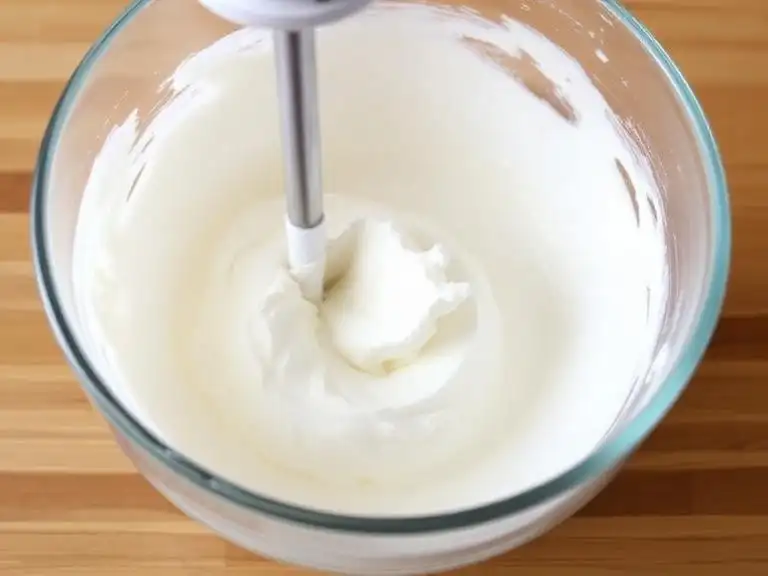
In a chilled bowl, beat the heavy cream, powdered sugar, and vanilla on medium speed until soft peaks form, then increase to medium-high until stiff peaks hold their shape — about 3–4 minutes total. Do not overbeat.
Visual cue: The cream holds a firm peak that curls at the tip when you lift the whisk.
Step 6 : Frost & Serve
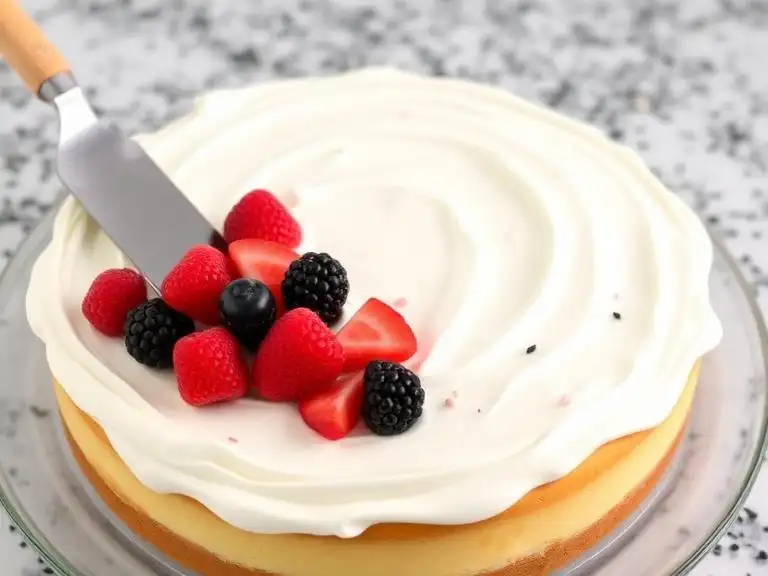
Spread the whipped cream frosting over the chilled cake in an even layer using an offset spatula. For a finished look, drag a fork across the surface in gentle waves. Garnish with fresh berries, Jello-flavored fruit slices, or a dusting of matching sprinkles. Slice and serve cold.
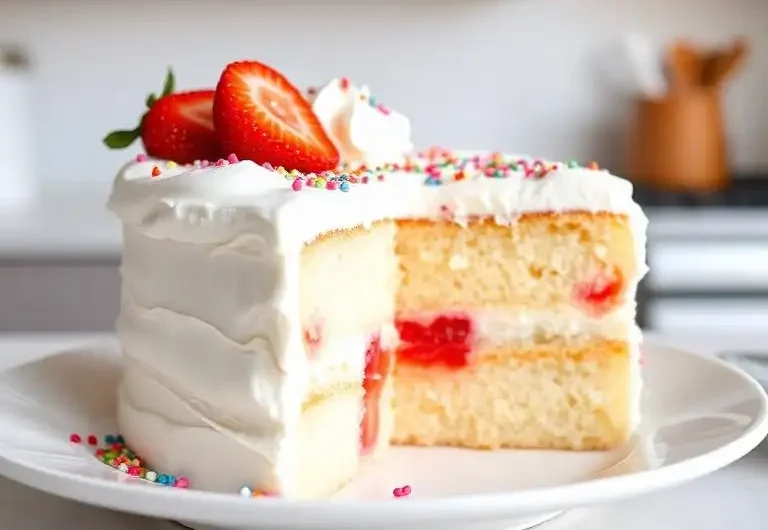
Texture cue: The fork should glide through tender cake, a jewel-toned Jello layer, and a cloud of cream in every slice.
Professional Baking Tips
- Match your Jello to fresh fruit. Strawberry Jello + fresh sliced strawberries on top, lime Jello + zest curls — the pairing signals flavor before the first bite and makes the presentation look intentional.
- Don’t skip the warm-cake soak. Pouring Jello over a fully cooled cake leaves it sitting on the surface. Pouring it over a still-warm cake allows capillary action to pull the liquid deep into the crumb.
- Stabilize your frosting for parties. Whisk 2 tablespoons of instant vanilla pudding powder into the cream before whipping. It firms the frosting so it holds clean slices for up to 48 hours in the fridge — bakery-counter reliable.
- Use a scale, not cups, for flour. Spooning flour from the bag into a measuring cup compacts it. 240 g on a kitchen scale is the same every time, giving you a consistent, tender crumb.
- Make it ahead. This poke cake is actually better on day two. The Jello migrates further into the cake overnight, deepening both the flavor and the color ribbons visible when you slice it.
OTHER RECIPES :
- Chia Seeds in Fruit Smoothies: The Café-Style Recipe You Need
- Best M&M Cookie Recipe (Thick, Gooey & Easy to Make)
- The Best Peach Cobbler Recipe with Cake Mix So Easy So Delicious!
Nutrition Per Serving (1 of 8 slices)
| Calories | Total Fat | Carbs | Sugars | Protein |
|---|---|---|---|---|
| ~420 kcal | 22 g | 52 g | 34 g | 5 g |
Values are estimates based on standard ingredients. Exact numbers vary by Jello flavor and fruit garnish.
Why This Is a Bakery-Style Cake
Most homemade poke cake recipes use a plain yellow box mix and stop there. This version applies three techniques professionals use to justify a premium price tag. First, the sour cream in the batter adds acidity that tenderizes gluten, producing a crumb that holds moisture for days without becoming gummy. Second, the warm-soak method creates defined Jello ribbons rather than a murky tint — you see the filling, you taste it in every bite, and the visual contrast makes each slice look architecturally deliberate. Third, the stabilized whipped cream frosting pipes, spreads, and slices like a dream, behaving the way a bakery’s display-case frosting does rather than sliding off after an hour on the table. The result is a dessert that looks effortless and tastes like you’ve been making it for years.
FAQ
1. What is a Jello poke cake? A poke cake is a baked cake pierced with dozens of holes immediately after baking, then flooded with a liquid filling — in this case, dissolved Jello — that soaks into the crumb and sets into colorful, fruity ribbons.
2. Which Jello flavor works best for poke cake recipes? Strawberry is the classic for good reason — it’s vivid, crowd-pleasing, and pairs with almost any frosting. Raspberry, cherry, and lime are close seconds. For something unexpected, try blue raspberry with a lemon-zest cream.
3. Can I use a box mix for the cake base? Yes. A classic yellow or white box mix works in a pinch. Substitute the water with whole milk and add an extra egg for a richer result that gets closer to the scratch version.
4. How far in advance can I make this cake? Up to 48 hours in advance, covered in the fridge. Add the whipped cream frosting no more than 4–6 hours before serving for the best texture (or use stabilized whipped cream and frost up to 24 hours ahead).
5. Why did my Jello stay on top instead of soaking in? Either the holes weren’t deep enough, the cake was too cold when you poured the Jello, or the Jello had already begun to set. Always poke deeply and pour while the Jello is still warm and the cake is still slightly warm.
6. Can I use sugar-free Jello? Absolutely. Sugar-free Jello sets and soaks the same way. It’s a popular option for reducing the overall sugar content of the dessert.
7. How do I store leftover poke cake? Cover tightly with plastic wrap or transfer slices to an airtight container. Store in the refrigerator for up to 4 days. Do not freeze — the Jello filling breaks down and weeps when thawed.
8. Can I make this in a round layer cake pan? Yes, but a 9×13 inch pan is ideal because the flat surface maximizes the frosted top. If using two 9-inch rounds, reduce the Jello by about a quarter so it doesn’t overwhelm the thinner layers.
9. My whipped cream frosting is runny. What went wrong? The cream wasn’t cold enough, or the bowl was warm. Return everything to the refrigerator for 20 minutes and try again. Adding 2 tablespoons of instant pudding powder will rescue it and stabilize it going forward.
10. Can I add fruit to the inside of the cake? Yes — thin-sliced fresh strawberries or raspberries pressed into the holes before pouring the Jello add texture and an extra layer of fresh fruit flavor.
Best Jello Poke Cake Recipe: Super Moist & Perfect for Any Occasion
Course: cakeCuisine: AmericanDifficulty: EasyServings
8
servingsPrep time
20
minutesCooking time
30
minutesCalories
420
kcalChill Time
2
HoursTotal Time
2 hours 50
minIngredients
- Cake
2 cups (240 g) all-purpose flour, spooned and leveled
1½ tsp baking powder
½ tsp baking soda
½ tsp fine sea salt
¾ cup (170 g) unsalted butter, room temperature
1½ cups (300 g) granulated sugar
3 large eggs, room temperature
2 tsp pure vanilla extract
1 cup (240 g) full-fat sour cream
- Jello Filling
1 box (3 oz / 85 g) Jello — any flavor (strawberry, raspberry, and cherry are classics)
1 cup (240 ml) boiling water
½ cup (120 ml) cold water
- Frosting
2 cups (480 ml) heavy whipping cream, very cold
3 tbsp (24 g) powdered sugar, sifted
1 tsp pure vanilla extract
Directions
- Step 1 : Make the Batter
Preheat your oven to 350 °F (175 °C). Grease a 9×13-inch baking pan with butter and line the bottom with parchment. Whisk together the flour, baking powder, baking soda, and salt in a medium bowl; set aside. In a stand mixer fitted with the paddle attachment, beat butter and sugar on medium-high speed for 3–4 minutes until the mixture is pale ivory and noticeably fluffy — you should feel almost no grittiness when you rub it between your fingers. Add eggs one at a time, fully incorporating each before the next, then mix in vanilla. Reduce speed to low and alternate adding the flour mixture and sour cream in three additions, beginning and ending with flour. Mix only until the last streak of flour disappears; the batter will be thick and satiny.
Visual cue: Batter falls off the spatula in thick, slow ribbons. - Step 2 : Bake the Cake
Spread the batter into the prepared pan, smoothing it into an even layer with an offset spatula. Bake for 28–32 minutes, rotating the pan halfway through.
Visual cue: The top is golden and the edges have pulled slightly away from the pan. Texture cue: The center springs back when lightly pressed with a fingertip. Doneness cue: A toothpick inserted in the center comes out with just a few moist crumbs — not wet batter.
Allow the cake to cool in the pan for 10 minutes. - Step 3 : Poke & Soak
While the cake is still warm (not hot), use the handle of a wooden spoon or a thick chopstick to poke holes every inch across the entire surface — roughly 40–50 holes. Go deep, nearly to the bottom, to create channels for the Jello. Dissolve the Jello powder in 1 cup boiling water, stirring for 2 minutes until fully clear, then stir in ½ cup cold water. Pour the warm Jello slowly and evenly over the cake, tilting the pan to coax it into every hole.
Visual cue: You’ll see the Jello seep down into the cake rather than pool on top. - Step 4 : Chill
Cover the pan tightly with plastic wrap and refrigerate for at least 2 hours, or overnight. This rest period is non-negotiable — it allows the Jello to fully set and the flavors to marry into the crumb.
Texture cue: The surface should feel firm and slightly tacky, not wet, when you press it gently. - Step 5 : Make the Whipped Cream Frosting
In a chilled bowl, beat the heavy cream, powdered sugar, and vanilla on medium speed until soft peaks form, then increase to medium-high until stiff peaks hold their shape — about 3–4 minutes total. Do not overbeat.
Visual cue: The cream holds a firm peak that curls at the tip when you lift the whisk. - Step 6 : Frost & Serve
Spread the whipped cream frosting over the chilled cake in an even layer using an offset spatula. For a finished look, drag a fork across the surface in gentle waves. Garnish with fresh berries, Jello-flavored fruit slices, or a dusting of matching sprinkles. Slice and serve cold.
Texture cue: The fork should glide through tender cake, a jewel-toned Jello layer, and a cloud of cream in every slice.
Notes
- Match your Jello to fresh fruit. Strawberry Jello + fresh sliced strawberries on top, lime Jello + zest curls — the pairing signals flavor before the first bite and makes the presentation look intentional.
- Don’t skip the warm-cake soak. Pouring Jello over a fully cooled cake leaves it sitting on the surface. Pouring it over a still-warm cake allows capillary action to pull the liquid deep into the crumb.
- Stabilize your frosting for parties. Whisk 2 tablespoons of instant vanilla pudding powder into the cream before whipping. It firms the frosting so it holds clean slices for up to 48 hours in the fridge — bakery-counter reliable.
- Use a scale, not cups, for flour. Spooning flour from the bag into a measuring cup compacts it. 240 g on a kitchen scale is the same every time, giving you a consistent, tender crumb.
- Make it ahead. This poke cake is actually better on day two. The Jello migrates further into the cake overnight, deepening both the flavor and the color ribbons visible when you slice it.