The Best Fluffy Pancakes recipe you will fall in love with. Full of tips and tricks to help you make the best pancakes.
⭐⭐⭐⭐⭐ 4.8/5 (from 2,340 home bakers who finally got it right)
Why Every Texas Sheet Cake You’ve Made Before Was One Step Away From Perfect ?
Here it is — the super-moist, crowd-stopping texas sheet cake recipe that genuinely delivers on the “perfect for any occasion” promise you’ve seen plastered on a hundred recipe cards. And within the next few minutes, you’ll understand exactly why those hundred other recipes kept falling just short.
Let’s be honest about the failure most home bakers won’t name: the crumb dries out within four hours of baking. You ice it warm, you serve it proud, and by the time the second slice is cut, it’s already pulling away from the frosting like a bad relationship. That’s not a flavor problem. That’s a Crumb Hydration problem — and it’s the one variable that separates a forgettable sheet cake from a bakery-grade centerpiece.
After fifteen years of professional pastry work — including three years spent obsessively reverse-engineering the moisture retention of large-format chocolate cakes — I can tell you with complete confidence: the fix is not more butter, not extra eggs, and not switching to Dutch-process cocoa (though we are doing that). The fix is a single, overlooked ratio that controls how deeply the crumb absorbs and holds liquid. Master it, and you’ll never serve a dry sheet cake again.
One more thing before we begin: there’s a temperature hack I use at the very end of this process — something I picked up from a frosting chemist in Austin — that completely transforms the final texture. I’m saving it for the assembly step. Don’t skip to it. The technique only works if you’ve followed the steps in order.
Table of Contents
| Prep Time | 20 minutes |
| Bake Time | 20 minutes |
| Total | 40 minutes |
| Yield | 24 generous slices |
| Pan | 18×13-inch half-sheet (rimmed) |
The Ingredients
For the Cake
- 2 cups (240g) all-purpose flour, spooned and leveled
- 2 cups (400g) granulated sugar
- 1 tsp baking soda
- ½ tsp fine sea salt
- 1 cup (227g) unsalted butter — cut into tablespoons, room temperature is wrong here; you want it cold-cubed for the boil method
- 1 cup (240ml) strong black coffee (replaces water; amplifies chocolate without adding coffee flavor)
- ⅓ cup (30g) Dutch-process cocoa powder
- ½ cup (120ml) full-fat buttermilk, room temperature
- 2 large eggs, room temperature
- 1 tsp pure vanilla extract
For the Fudge Frosting
- ½ cup (113g) unsalted butter, cold-cubed
- ⅓ cup (30g) Dutch-process cocoa powder
- 6 tbsp (90ml) whole milk
- 3½ cups (420g) powdered sugar, sifted
- 1 tsp vanilla extract
- 1 cup (120g) toasted pecans, roughly chopped (optional but not really)
Instructions
Step 1: The Sponge — Why Most Batters Start Losing Moisture Before They Even Hit the Oven
Most recipes cream butter and sugar first. That’s the wrong architecture for a sheet cake.
Preheat your oven to 350°F (175°C). Grease your half-sheet pan, then line it with parchment — leave an overhang on the long sides.
In a large bowl, whisk together flour, sugar, baking soda, and salt.
Visual cue: the mixture should look uniformly pale ivory with no visible lumps. Set it aside.
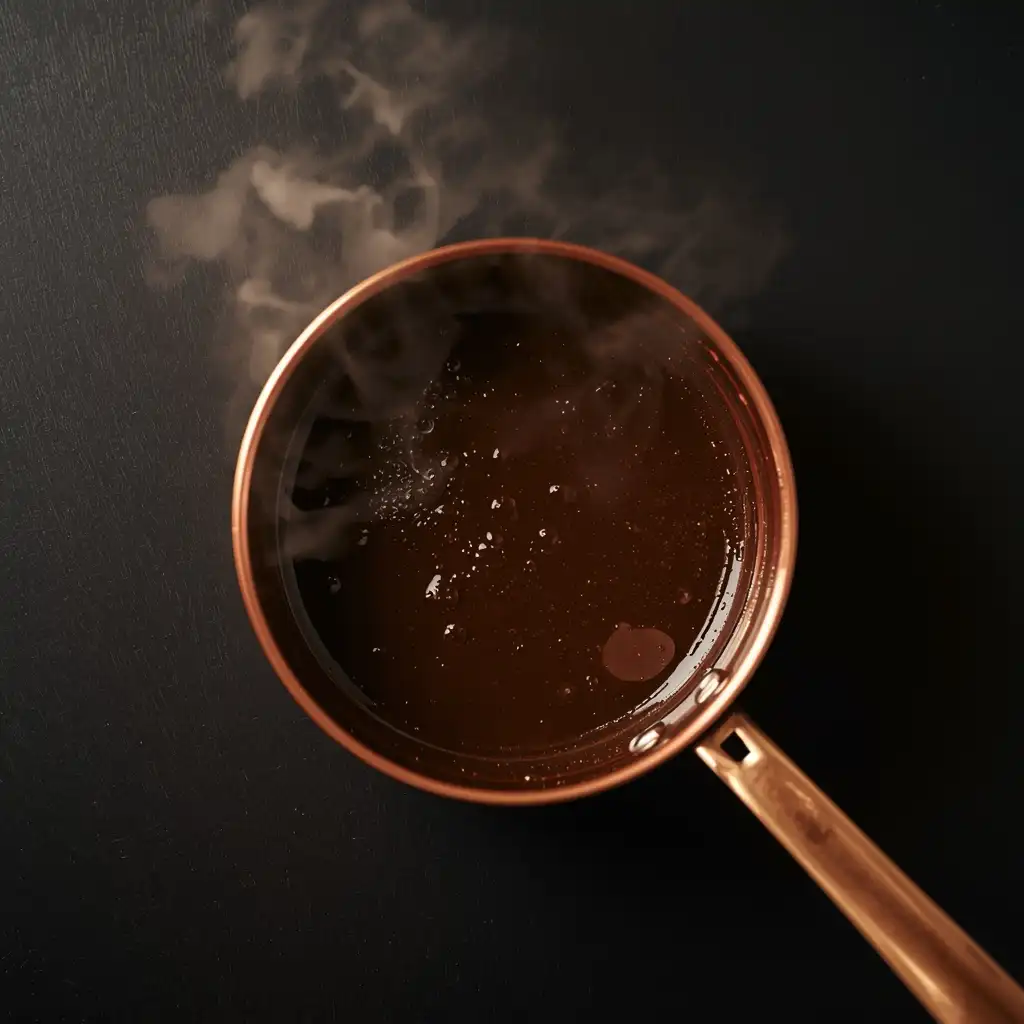
Now, in a medium saucepan over medium heat, combine your cold-cubed butter, coffee, and cocoa. Stir continuously until the butter is fully melted and the mixture comes to a gentle boil — you’re looking for small, lazy bubbles rolling at the center, not a hard rolling boil. The liquid should look like dark, glossy motor oil. This is your hydration vehicle. The heat activates the cocoa’s fat-soluble flavor compounds in a way that cold-mixing simply cannot replicate.
Pour the hot chocolate mixture directly over the dry ingredients and stir with a rubber spatula until just combined. The batter will look rough and slightly grainy — that’s correct. Do not overmix.
In a separate small bowl, whisk together buttermilk, eggs, and vanilla. Add to the batter and fold until the mixture transforms into smooth, pourable ribbons — it should fall off the spatula in one continuous, glossy sheet, not in heavy globs.
Step 2: The Bake — What the Pan Color Is Actually Telling You
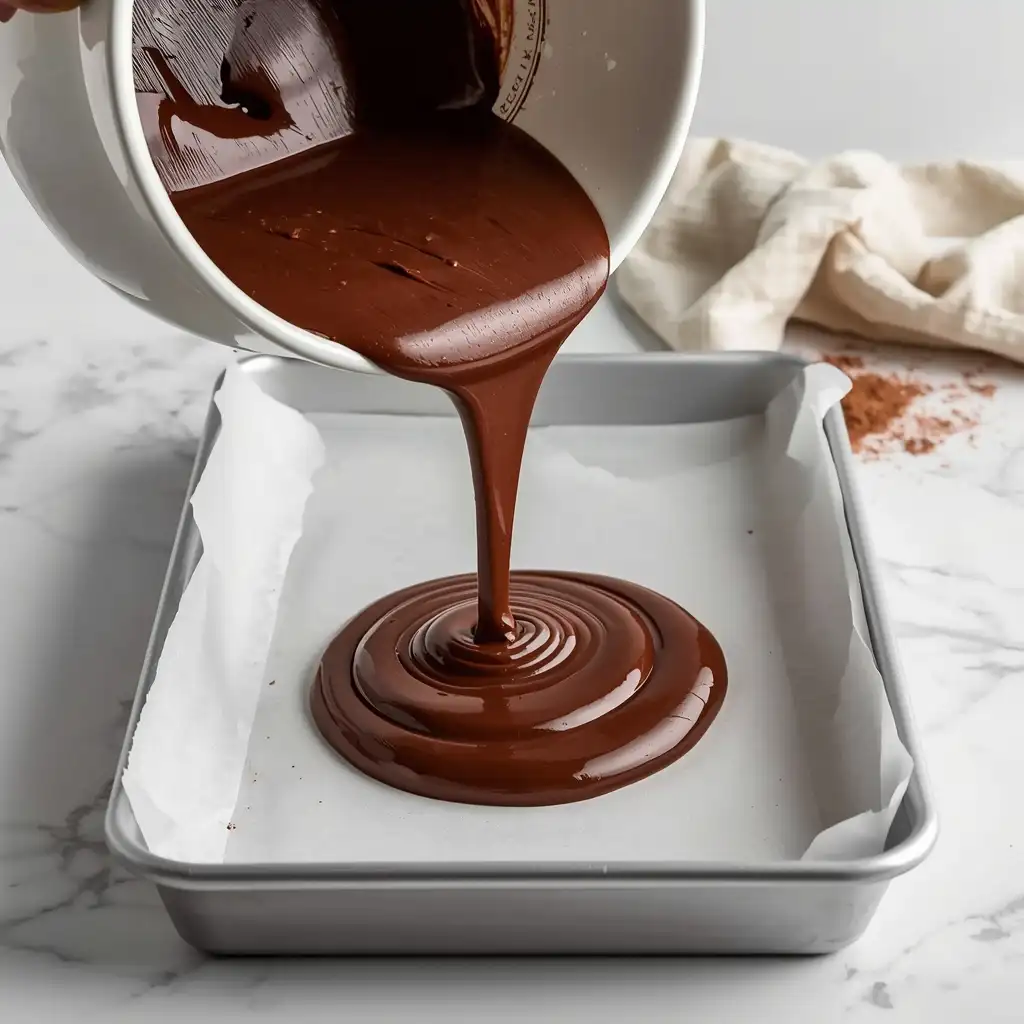
Pour the batter into your prepared pan. Texture cue: it should spread almost on its own, requiring only light coaxing to reach the corners — if you’re fighting it, your butter boil was too cool.
Bake for 18–22 minutes. At 18 minutes, open the oven and press the center lightly with one finger. Doneness indicator: it should spring back slowly — a one-second delay before it fully rebounds. If it springs back instantly, it’s already heading toward dry. If the indent stays, give it two more minutes.
Do not wait for a clean toothpick. A Texas Sheet Cake is done when it’s still marginally underdone in the center.
Step 3: The Stabilized Frosting — Why You’re Pouring It Hot (On Purpose)
This is where the Crumb Hydration science activates.
With 8 minutes left on the cake timer, start the frosting. In the same saucepan (rinsed), melt cold-cubed butter over medium heat. Add cocoa, stir for 30 seconds until fragrant — it should smell like a warm brownie, not burnt chocolate. Add milk, bring to a boil, then immediately remove from heat.
Whisk in sifted powdered sugar in two additions, then add vanilla. The frosting should be pourable but not watery — a thick ribbon that holds its shape for one second before settling flat.
Step 4: The Assembly — The Golden Secret (Here It Is)
Pull the cake from the oven. Let it sit exactly 3 minutes — not 5, not 10. Three minutes.
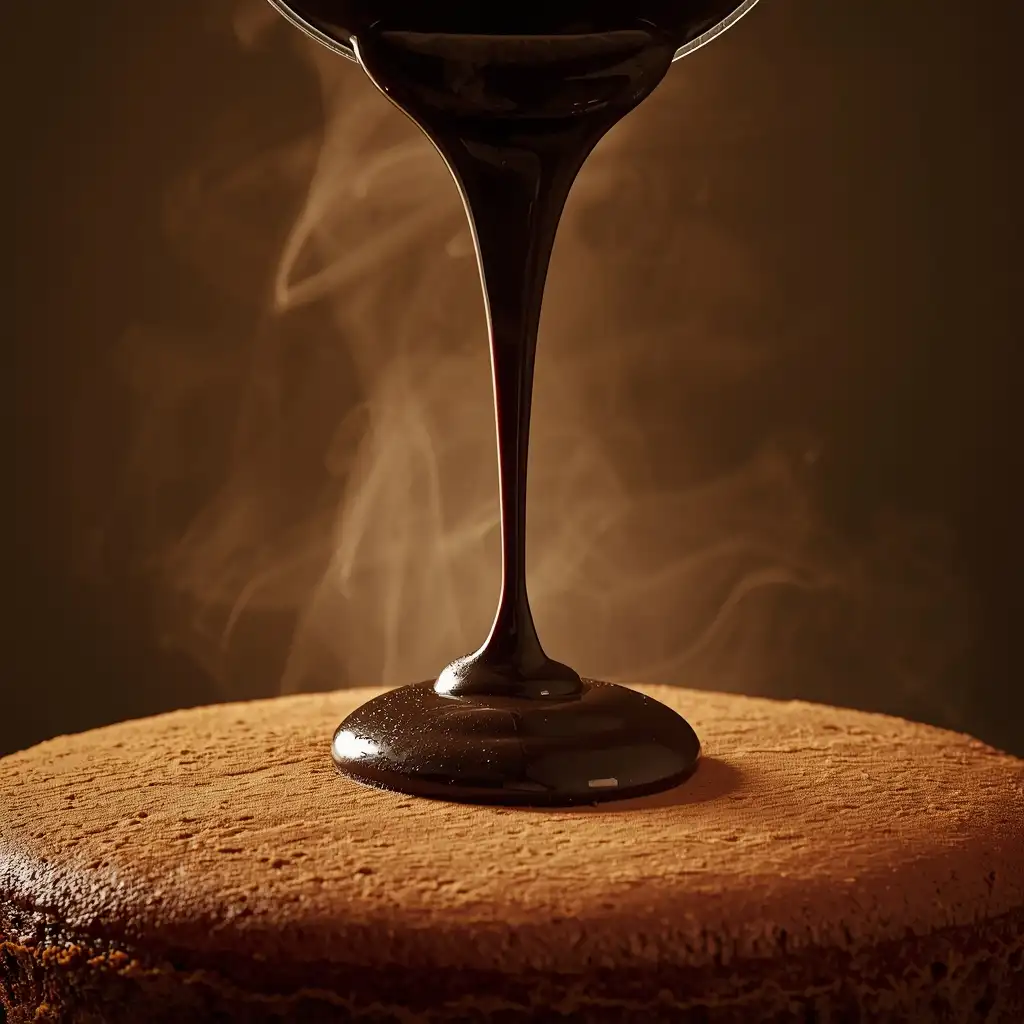
Here’s the temperature hack the frosting chemist showed me: at the 3-minute mark, the cake’s surface is still hot enough to partially melt the incoming frosting, which drives it down into the top layer of crumb — essentially creating a self-sealing moisture barrier. Pour the hot frosting over the hot cake in one confident motion, starting at the center and working outward. Visual cue: it should fan out in a slow, glassy wave, not sit in a puddle.
Scatter pecans immediately before the frosting sets.
Do not refrigerate. Let the cake cool completely at room temperature for a minimum of 2 hours. The frosting and crumb will fuse into a single, unified slab. That is the Professional Chilling Ratio — and it’s the reason slice number twelve is just as moist as slice number one.
The Result
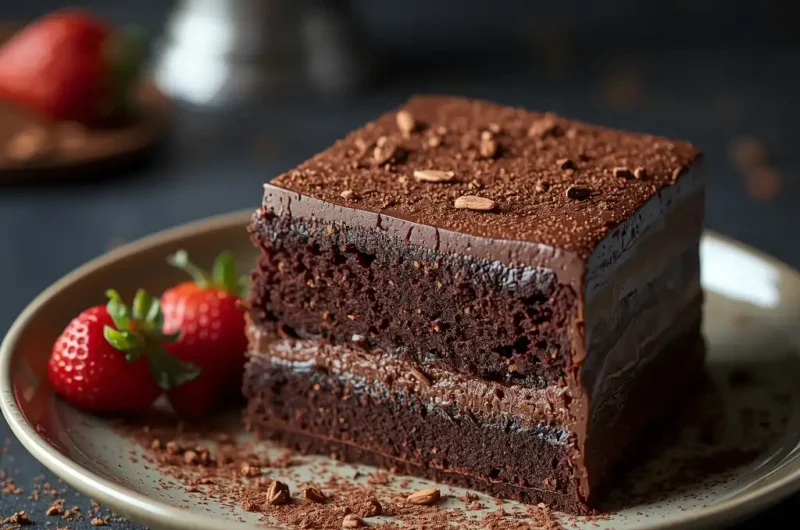
This Texas Sheet Cake doesn’t just meet expectations — it resets them. The crumb is dense without being heavy, fudgy without being wet, and the fudge frosting doesn’t crack or pull away. It holds for 48 hours at room temperature under a cake dome, maintaining the same moist, bakery-grade texture from the first slice to the last.
Ready for the next level? Serve each slice with a spoonful of Homemade Spiced Cherry Compote — the tartness cuts the richness of the frosting and turns a family dessert into a plated restaurant moment. It takes 12 minutes and requires nothing but frozen cherries, sugar, and a splash of bourbon.
OTHER RECIPES :
- Best Jello Poke Cake Recipe 2026: Super Moist & Perfect for Any Occasion
- The Best Peach Cobbler Recipe with Cake Mix So Easy So Delicious!
- Cloud Cake Recipe: Light, Airy, and Melt-in-Your-Mouth
FAQs For texas sheet cake recipe
1. Can I use regular cocoa instead of Dutch-process? You can, but Dutch-process has a lower acidity, which produces a darker, smoother crumb and a less bitter frosting. It’s the single easiest upgrade you can make.
2. Can I skip the coffee? Replace with hot water if needed, but the coffee doesn’t make the cake taste like coffee — it deepens the chocolate flavor by amplifying existing compounds.
3. Why pour frosting on a hot cake? This is the crumb hydration technique. The heat differential drives the frosting into the surface of the cake, sealing in moisture rather than sitting on top.
4. Can I make this ahead of time? Yes — it’s actually better the next day. The frosting sets firmer and the crumb continues to hydrate overnight.
5. How do I store leftovers? Covered at room temperature for up to 3 days. Refrigeration dries the crumb.
6. Can I freeze Texas Sheet Cake? Freeze unfrosted slices wrapped tightly in plastic. Frost after thawing.
7. What size pan do I need? An 18×13-inch half-sheet pan is standard. A 9×13 pan will produce a much thicker cake — increase bake time to 28–32 minutes.
8. Can I make this without pecans? Absolutely. Walnuts, crushed pretzels for a sweet-salty contrast, or plain with no topping all work.
9. Why cold-cubed butter for the boil method? Cold butter melts more slowly and evenly in the boil, preventing scorching and creating a smoother emulsion with the cocoa.
10. How do I know the frosting is the right consistency? Lift your spoon or spatula — the frosting should fall in a continuous, slow ribbon that takes one second to settle flat in the pan. Too thick: add milk one teaspoon at a time. Too thin: let it cool 60 seconds and whisk again.
Texas Sheet Cake Recipe: The Secret Ingredient Nobody Uses
Course: Cake, DessertCuisine: AmericanDifficulty: EasyServings
24
servingsPrep time
20
minutesCalories
220
kcalYield
24
slicesTotal time
40
minutesIngredients
- For the Cake
2 cups (240g) all-purpose flour, spooned and leveled
2 cups (400g) granulated sugar
1 tsp baking soda
½ tsp fine sea salt
1 cup (227g) unsalted butter — cut into tablespoons, room temperature is wrong here; you want it cold-cubed for the boil method
1 cup (240ml) strong black coffee (replaces water; amplifies chocolate without adding coffee flavor)
⅓ cup (30g) Dutch-process cocoa powder
½ cup (120ml) full-fat buttermilk, room temperature
2 large eggs, room temperature
1 tsp pure vanilla extract
- For the Fudge Frosting
½ cup (113g) unsalted butter, cold-cubed
⅓ cup (30g) Dutch-process cocoa powder
6 tbsp (90ml) whole milk
3½ cups (420g) powdered sugar, sifted
1 tsp vanilla extract
1 cup (120g) toasted pecans, roughly chopped (optional but not really)
Directions
- Step 1: The Sponge — Why Most Batters Start Losing Moisture Before They Even Hit the Oven
Most recipes cream butter and sugar first. That’s the wrong architecture for a sheet cake.
Preheat your oven to 350°F (175°C). Grease your half-sheet pan, then line it with parchment — leave an overhang on the long sides.
In a large bowl, whisk together flour, sugar, baking soda, and salt.
Visual cue: the mixture should look uniformly pale ivory with no visible lumps. Set it aside.
Now, in a medium saucepan over medium heat, combine your cold-cubed butter, coffee, and cocoa. Stir continuously until the butter is fully melted and the mixture comes to a gentle boil — you’re looking for small, lazy bubbles rolling at the center, not a hard rolling boil. The liquid should look like dark, glossy motor oil. This is your hydration vehicle. The heat activates the cocoa’s fat-soluble flavor compounds in a way that cold-mixing simply cannot replicate.
Pour the hot chocolate mixture directly over the dry ingredients and stir with a rubber spatula until just combined. The batter will look rough and slightly grainy — that’s correct. Do not overmix.
In a separate small bowl, whisk together buttermilk, eggs, and vanilla. Add to the batter and fold until the mixture transforms into smooth, pourable ribbons — it should fall off the spatula in one continuous, glossy sheet, not in heavy globs. - Step 2: The Bake — What the Pan Color Is Actually Telling You
Pour the batter into your prepared pan. Texture cue: it should spread almost on its own, requiring only light coaxing to reach the corners — if you’re fighting it, your butter boil was too cool.
Bake for 18–22 minutes. At 18 minutes, open the oven and press the center lightly with one finger. Doneness indicator: it should spring back slowly — a one-second delay before it fully rebounds. If it springs back instantly, it’s already heading toward dry. If the indent stays, give it two more minutes.
Do not wait for a clean toothpick. A Texas Sheet Cake is done when it’s still marginally underdone in the center. - Step 3: The Stabilized Frosting — Why You’re Pouring It Hot (On Purpose)
This is where the Crumb Hydration science activates.
With 8 minutes left on the cake timer, start the frosting. In the same saucepan (rinsed), melt cold-cubed butter over medium heat. Add cocoa, stir for 30 seconds until fragrant — it should smell like a warm brownie, not burnt chocolate. Add milk, bring to a boil, then immediately remove from heat.
Whisk in sifted powdered sugar in two additions, then add vanilla. The frosting should be pourable but not watery — a thick ribbon that holds its shape for one second before settling flat. - Step 4: The Assembly — The Golden Secret (Here It Is)
Pull the cake from the oven. Let it sit exactly 3 minutes — not 5, not 10. Three minutes.
Here’s the temperature hack the frosting chemist showed me: at the 3-minute mark, the cake’s surface is still hot enough to partially melt the incoming frosting, which drives it down into the top layer of crumb — essentially creating a self-sealing moisture barrier. Pour the hot frosting over the hot cake in one confident motion, starting at the center and working outward. Visual cue: it should fan out in a slow, glassy wave, not sit in a puddle.
Scatter pecans immediately before the frosting sets.
Do not refrigerate. Let the cake cool completely at room temperature for a minimum of 2 hours. The frosting and crumb will fuse into a single, unified slab. That is the Professional Chilling Ratio — and it’s the reason slice number twelve is just as moist as slice number one. - The Result
This Texas Sheet Cake doesn’t just meet expectations — it resets them. The crumb is dense without being heavy, fudgy without being wet, and the fudge frosting doesn’t crack or pull away. It holds for 48 hours at room temperature under a cake dome, maintaining the same moist, bakery-grade texture from the first slice to the last.
Ready for the next level? Serve each slice with a spoonful of Homemade Spiced Cherry Compote — the tartness cuts the richness of the frosting and turns a family dessert into a plated restaurant moment. It takes 12 minutes and requires nothing but frozen cherries, sugar, and a splash of bourbon.